How to Get Candid Wedding Photos From Guests
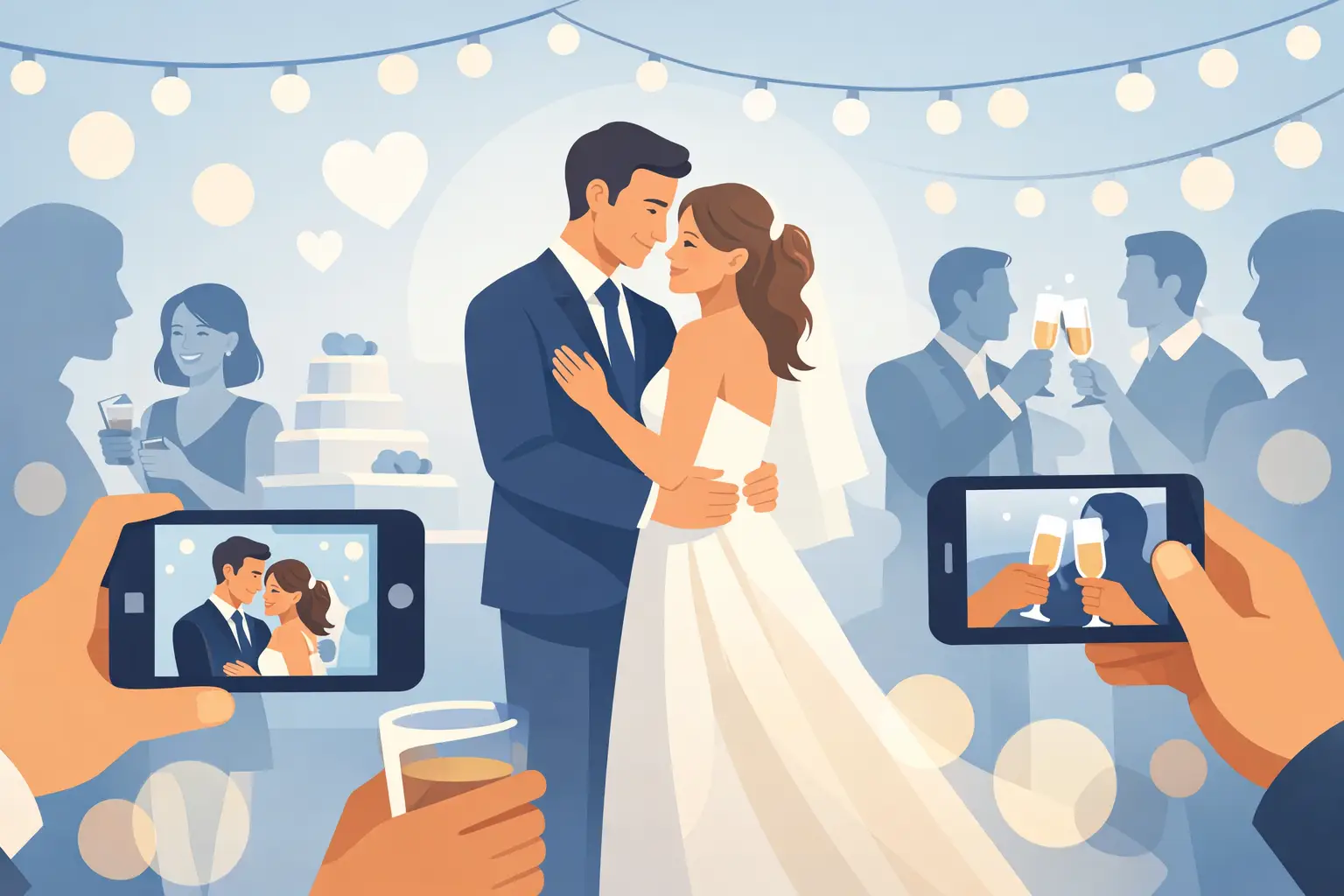
The best wedding photo of the night might not happen at the altar. It might be your dad fixing his tie in a mirror, your college friends crying-laughing during toasts, or your grandmother holding your bouquet when no one thinks to pose her. If you’re wondering how to get candid wedding photos from guests, the answer is less about asking people to “take more pictures” and more about making it incredibly easy for them to capture and share what they see.
Guests already photograph weddings. The problem is what happens after. Those images end up scattered across text threads, social captions, AirDrops, and camera rolls you’ll never see. So the real goal is twofold: create moments guests want to document, and remove every bit of friction between taking the photo and getting it into your album.
Why guest candids matter more than you think
Your photographer captures the day beautifully, but they can’t be everywhere at once. While they’re focused on portraits, first looks, family formals, and key reception moments, your guests are noticing the quieter scenes around the edges. They see the half-second reactions, the table-by-table energy, the dance floor chaos from inside the circle.
That perspective is what makes guest candids valuable. They don’t replace professional photography. They complete it.
There’s also a trade-off worth naming. Guest photos are less polished. Lighting may be uneven. Framing can be imperfect. But that’s often the point. The charm of a candid is that it feels lived-in, not directed.
How to get candid wedding photos from guests before the wedding
The best results start before anyone arrives.
If guests have to figure out where to send photos after the wedding, most won’t do it. Not because they don’t care, but because life moves on fast. Build the sharing plan ahead of time so the action happens in the moment, while the energy is still there.
The simplest setup is one private album guests can access instantly from their phones. A QR code works especially well because it removes the usual friction. No app. No account. No one asking your maid of honor where to upload things halfway through dinner.
This is where presentation matters too. If the upload method feels clunky or overly technical, people ignore it. If it feels elegant and obvious, they use it. A small printed card at tables, the bar, and the guest book area does more than explain logistics. It gives guests permission to participate.
You’ll also want to tell your photographer and planner what you’re doing. A good photographer won’t feel threatened by guest candids when expectations are clear. In fact, many couples find that a professional team appreciates having guests handle the casual in-between moments while they stay focused on the shots that require skill and timing.
Ask for a specific kind of photo
“Take lots of pictures” is too vague. Guests respond better when they know what kind of moments you actually want.
A short prompt works well on signage or your wedding website. Think in human terms: capture the happy tears, the table laughs, the dance floor spins, the reunion hugs, the behind-the-scenes moments we might miss. That language is warmer than a generic request and gives people a mental checklist without making the night feel staged.
It also helps to set the tone socially. If your officiant, DJ, or emcee mentions it once in a natural way, guests are more likely to remember. Keep it brief and celebratory. You’re not assigning homework. You’re inviting them to help preserve the day from their point of view.
Put the upload option where guests already pause
Placement changes everything.
A single sign near the entrance is easy to miss. Guests are greeting people, finding seats, and thinking about the ceremony. Instead, put your QR code where people naturally stop and look down: reception tables, the bar, escort card display, lounge areas, and near the guest book.
This matters because candid behavior happens in waves. People are most likely to upload when they sit down, wait for dinner, take a break from dancing, or glance at their phone during transitions. If the upload point appears right in those moments, participation goes up.
A live gallery can help too. When guests see photos appearing during the reception, the experience becomes interactive rather than transactional. It creates a gentle snowball effect. One table uploads, another table notices, and suddenly the album starts filling with the kind of moments couples usually have to chase down later.
Make it effortless for every generation
One of the biggest mistakes couples make is assuming all guests will navigate a multi-step process. They won’t.
If you want candid wedding photos from guests across age groups, the process needs to work for your college roommate, your aunt, and your grandparents’ friends. Browser-based uploads tend to be the sweet spot because they skip the app download barrier. Every extra step loses people.
That simplicity is especially useful at larger weddings, where volume works in your favor. Not every guest has to participate. If even a small percentage can upload quickly and confidently, you’ll still collect a rich, wide-angle record of the day.
Privacy matters here too. Some guests are happy to share photos with you but don’t want to post publicly. A private album feels more comfortable than asking people to tag you on social or dump memories into a crowded group chat. It keeps the experience intimate, which fits the occasion better.
Create candid-friendly moments without forcing them
You can encourage candid photos without turning the wedding into a content shoot.
The best guest images usually come from movement and interaction. That means your timeline and layout matter more than people realize. Cocktail hour is naturally strong for candids because guests mingle, react, and reconnect. A crowded dance floor helps too. Lounge seating, late-night snacks, and interactive touches such as a champagne tower or audio guest book tend to generate spontaneous photo opportunities.
What doesn’t work as well is over-structuring every minute. If the day feels tightly managed from one formal event to the next, guests have fewer organic moments to capture. Space between programmed events gives your wedding room to breathe, and that breathing room often produces the images you end up loving most.
There’s an etiquette balance here. You want people present, not filming every second through a screen. That’s why an unplugged ceremony and a more open reception can be a smart combination. It protects the most meaningful part of the day while still welcoming guest perspectives later.
Give guests a reason to upload that same day
Timing is everything.
The longer you wait, the fewer photos you’ll receive. By the next morning, people are traveling, recovering, or back in regular life. Sending a follow-up text after the honeymoon can still recover a few images, but it won’t capture the full set.
The strongest approach is same-day collection. Mention it once during the reception. Keep the QR code visible. If you’re displaying a live gallery, that real-time feedback becomes its own incentive. People like seeing their contribution appear instantly.
This is one reason platforms built for weddings tend to outperform general sharing methods. A purpose-built flow keeps the action focused on one thing: take the photo, scan once, upload in seconds, done. With wed.photo, that simplicity is the whole point. Guests don’t need to install anything or create an account, which means more of the night actually makes it into your album.
What to avoid if you want better guest photos
A few common choices quietly reduce participation.
Overly wordy instructions tend to get ignored. So do tiny QR signs tucked into decor that no one notices. Hashtags are unreliable now, especially for private weddings or guests who rarely post. Shared cloud folders can work for a very tech-comfortable crowd, but for most weddings they ask too much in the moment.
It’s also worth resisting the urge to pressure guests into constant documentation. If every sign sounds demanding, people tune out. If every table card feels beautifully simple, guests are more likely to respond.
And while disposable cameras can be charming, they come with trade-offs. They’re fun as an aesthetic choice, but image quality is unpredictable, developing takes time, and you lose the immediate ease of digital sharing. For some couples, that nostalgia is worth it. For others, convenience and completeness matter more.
The real secret: reduce friction, increase access
If you strip this down to its core, how to get candid wedding photos from guests comes down to one principle: make participation feel natural.
Guests do not need more motivation. They need less friction.
When the sharing method is private, fast, and right in front of them, they contribute more. When they know you want the unposed moments, they notice them. When the process respects their time, every little scene that would have disappeared into someone else’s camera roll has a better chance of finding its way back to you.
Years from now, those are often the photos that feel most alive. Not just how the wedding looked, but how it felt.