How to Preserve Wedding Originals Without Chasing
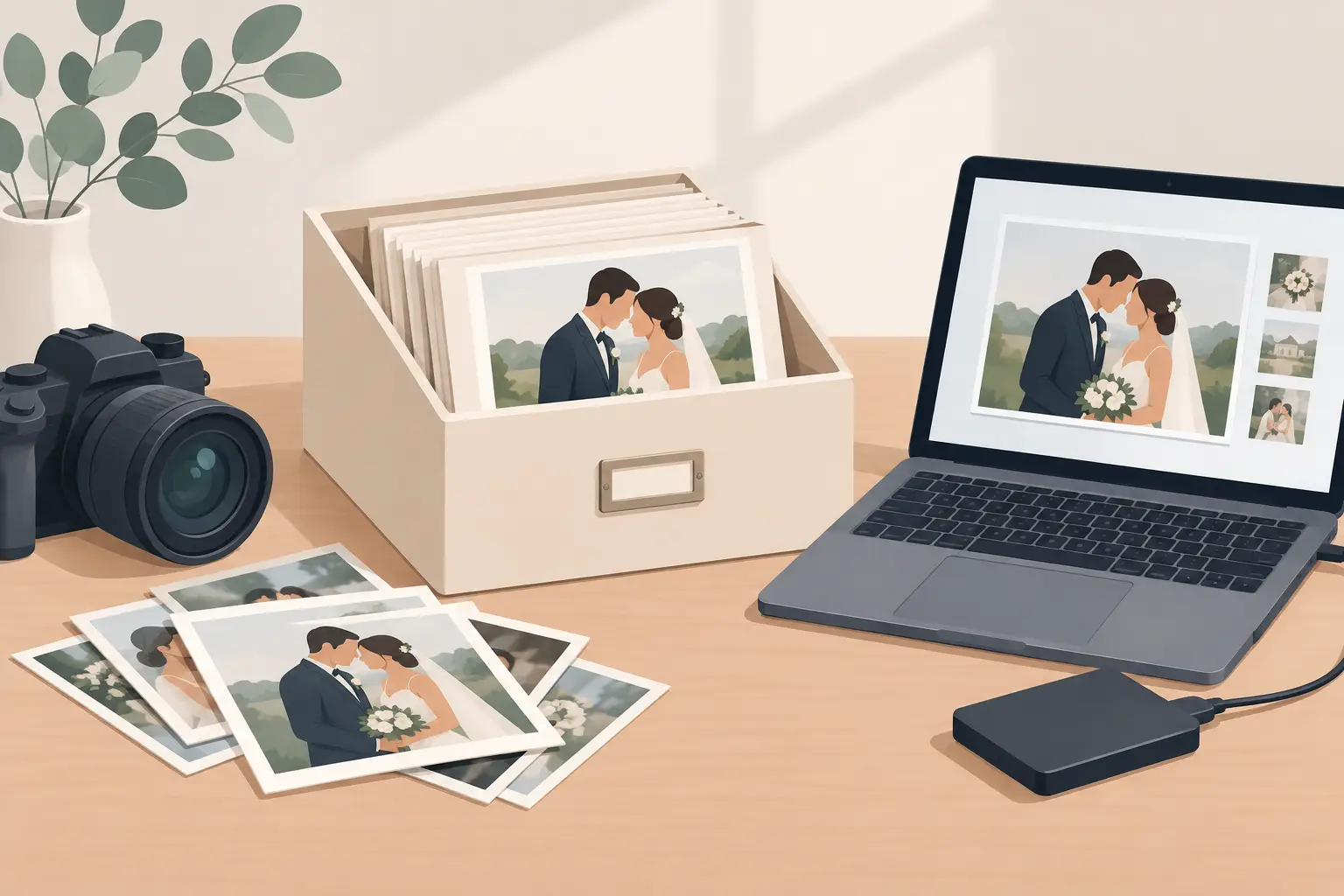
The photo of your grandmother laughing during dinner. Your best friend fixing your veil five minutes before the ceremony. The packed dance floor at the exact moment your favorite song came on. These are often the images couples never receive unless they make it easy for guests to share them. To preserve wedding originals, you need a plan that protects full-quality files before they get compressed, buried in a group chat, or forgotten on someone else's phone.
A professional photographer remains essential. They capture the portraits, the ceremony, and the polished frames you will print. But your guests see a different wedding: the quick hugs, the table-side jokes, the late-night dance moves, and the small emotional moments happening just outside the photographer's view. The best wedding archive holds both.
Why wedding originals disappear so easily
Most couples do not lose wedding photos because no one took them. They lose them because sharing is inconvenient.
After the reception, guests send a few favorites by text. Someone posts a short video to social media. A relative promises to AirDrop a folder later. Files move between phones, apps, and group chats, often shrinking along the way. Weeks pass, the honeymoon begins, and asking 120 people to search their camera rolls becomes one more task you do not want.
That process also changes the files themselves. Messaging platforms commonly compress photos and videos to make them faster to send. What arrives may look fine on a phone, but it is not necessarily the version you want to save, edit, print, or turn into a photobook years from now. A blurry copy of a beautiful moment is still a loss.
The goal is not to make every guest document the day. It is to give the guests who already will a clear, effortless place to put what they capture.
Preserve wedding originals with one clear destination
The simplest approach is one private album for every guest photo and video, available from the moment the celebration starts. When the destination is obvious, people do not have to ask where to send a file, hunt for an email address, or download an app they will use once.
A QR code works especially well because it meets guests where they are: holding a phone. Place it on welcome signage, bar menus, table cards, or a small sign near the guest book. Guests scan, upload from their camera roll, and return to the party. No app. No login. No awkward follow-up the next day.
The QR code itself is only part of the experience. The upload page should be simple enough for every generation in the room. If a guest needs to create an account, find a password, or understand unfamiliar settings, many otherwise wonderful photos will stay on their phone. For a wedding, fewer steps means more memories collected.
A wedding-specific platform such as wed.photo can create that single home for photos and videos while keeping the album private and preserving full-resolution uploads. That means your guests can contribute in seconds, and you are not left piecing together lower-quality copies from multiple conversations afterward.
Let guests know what you want
A gentle invitation works better than a long instruction sheet. Add a short line near your QR code, such as: “Scan to share the moments we might miss.” It feels warm, tells guests exactly what to do, and gives them permission to capture candid images.
You can also mention the album during a welcome toast or ask your DJ to make one brief announcement before open dancing begins. Keep it light. Guests should feel invited, not assigned a job.
Full resolution matters more than you think
Your wedding may be one day, but the photos will live far beyond it. Original-quality files give you options later: a framed print for your hallway, a sharp image in a photobook, a video montage for an anniversary, or a backup copy when a phone is replaced.
Full resolution does not mean every guest image will look like editorial photography. Some will be imperfect, dark, tilted, or wonderfully chaotic. That is part of their value. The point is to retain the best available version of each moment rather than accepting an automatically reduced copy because it was easier to send.
There is a practical trade-off. Original photo and video files take more storage space than compressed versions, particularly at a large wedding. Choose a collection option with enough capacity for your guest count and plan to download your complete archive after the event. Storage should support the celebration, not become another thing to manage indefinitely.
Save more than the final favorites
It is tempting to download only the polished images you love most. Save the full collection, too.
The photo that seems ordinary now may become meaningful later because of who appears in it. A ten-second video of your parents talking at their table may carry more emotion in ten years than a perfectly posed portrait. Keep the raw, funny, quiet, and imperfect moments alongside your curated favorites.
For extra peace of mind, keep copies in two places after you download them. For example, save one organized folder on your computer and another in a trusted personal cloud storage account or external drive. Technology changes, phones are lost, and a second copy is an easy kindness to your future selves.
Set up collection before the wedding weekend
Do not wait until guests arrive to decide how photos will be shared. Set up your album while planning is still calm, then test the exact guest experience on a few different phones. Scan the printed QR code. Upload a photo and a video. Confirm that the gallery displays correctly and that the files look as expected.
Print your QR materials early enough to see them in person. A code that is too small, printed on glossy paper with glare, or placed somewhere dim will get fewer scans. Table cards tend to work well because guests see them while seated and have a natural moment to look at their phones. A larger sign near the entrance or bar gives the system a second chance to be noticed.
If you are using a live reception slideshow, decide who will keep an eye on it. Live galleries add energy because guests can see the celebration appear in real time, but the setting matters. It is best for a relaxed reception, not a quiet ceremony or an intimate dinner where screens may feel distracting. You can also choose to collect privately all night and enjoy the reveal together the next morning.
Give trusted people a small role
You do not need to manage media collection on your wedding day. Ask a sibling, planner, maid of honor, or tech-comfortable friend to place the signs, confirm they are visible, and mention the QR code if guests ask.
That person is not there to chase uploads. They are simply removing tiny points of friction so you can stay present. The right system should run quietly in the background.
Make the post-wedding download part of the ritual
The morning after your wedding has its own kind of magic. Coffee, leftover cake, a little exhaustion, and the first chance to see the day from everyone else's perspective.
Open the guest album together before you begin the usual post-wedding tasks. You may find the moment your flower girl twirled when no one was watching, the view from the back row during your vows, or a video of friends cheering as you left the reception. These are not replacement images for your professional gallery. They are the candid layer that makes the story feel complete.
Once uploads have slowed, download the originals in full. Create a simple folder structure that will still make sense years from now: one master folder for the wedding, one folder for guest originals, one for professional files, and one for your selected favorites. Use clear names and dates. Future you should not have to decipher “IMG_4729_FINAL_final.”
You may receive late uploads from guests who took a few days to recover, travel home, or find the right video. Leave the album available for a reasonable window, then send one warm final reminder to the people closest to you. After that, let it be complete. Chasing every possible file is not the point. Preserving the moments that were freely shared is.
The memory you cannot recreate
You can reprint an invitation. You can order a second cake for an anniversary. But the unplanned images of the people you love, gathered in one room for one extraordinary day, cannot be recreated.
Give those memories one easy place to land while the music is still playing. Then let yourselves wake up to a wedding that looks not only beautiful, but fully lived.