How to Set Up a Wedding Photo Station That Works
The best reception photos rarely happen during the formal moments. They happen when your college friends squeeze into a booth, your grandmother starts dancing, or someone catches the flower girl asleep under a table. When you set up wedding photo station access that feels effortless, those little scenes do not disappear into text threads the next morning.
A great photo station is not about asking guests to do more on your wedding day. It is about giving them one clear, beautiful place to share what they are already capturing. No app. No login. No awkward follow-up message asking everyone to send their photos.
Start with one simple purpose
Before choosing signs, props, or a backdrop, decide what your station is meant to do. A traditional photo booth creates posed keepsakes. A guest photo-sharing station collects the candid photos and videos happening everywhere else. You can have both, but they solve different problems.
For most couples, the goal is simple: collect every guest perspective in one private album. That means the station should make uploading easier than posting to a group chat. A QR code guests can scan in seconds is usually the clearest path.
Keep the experience focused. If guests have to download something, make an account, or figure out which hashtag to use, many will mean well and never get around to it. The fewer decisions required, the more memories you will receive.
Choose the right place for your wedding photo station
Placement changes everything. A station tucked beside the gift table may look tidy, but it can be missed by guests who never walk that direction. Put it where people naturally pause, mingle, or wait.
The cocktail hour entrance is a strong option because guests have their phones out and a few unhurried minutes before dinner. Near the bar works well for a lively crowd, while a spot beside the guest book gives the station a natural reason to be noticed. For a seated dinner, place QR table cards at every table and use one larger sign near the dance floor or dessert display as a reminder later in the evening.
Avoid placing the only sign directly beside a loud speaker, a dark corner, or an area that becomes congested. Guests should be able to scan without feeling like they are blocking a line or interrupting the flow of the room.
Give it more than one moment
One sign at the entrance is helpful, but it should not carry the whole job. Guests arrive at different times, and many are focused on finding their seats or greeting family. A small reminder at the table gives them another chance once they have settled in.
A simple three-part setup tends to work beautifully: a welcome sign near cocktail hour, QR cards on tables, and one final sign near the dance floor or exit. It feels present without turning your reception into a tech demo.
Make the instruction impossible to miss
Your sign does not need a paragraph. In fact, the best ones are short enough to understand while walking by. Lead with the emotional reason, then give the action.
Try language like: “Share the moments we miss.” Follow it with: “Scan to add photos and videos to our private wedding album.” Put the QR code directly below, with enough white space around it to scan easily.
Use a large, high-contrast code. Cream text on a pale floral background may match your palette, but it can be frustrating for phone cameras. A black QR code on a light background is still elegant, especially when framed with your wedding colors, monogram, or a favorite engagement photo.
If you are using printed table cards, keep the card standing upright and avoid tiny codes. Guests should not need to pick up a card, squint, and tilt it toward the light to participate.
Add a human nudge
Even a perfect sign benefits from one personal mention. Ask your DJ, bandleader, planner, or a trusted member of your wedding party to make a brief announcement after dinner or before open dancing.
The message can be as simple as: “The couple would love to see the night through your eyes. Scan the QR code on your table to share your photos and videos.” That one reminder often brings in the joyful, slightly blurry dance-floor clips you would never otherwise see.
Build the station around the guest experience
A photo station can be as minimal or as styled as you want. For a garden wedding, a framed sign on an easel with small table cards may be all you need. For a city reception, a clean acrylic sign, candles, and a polished QR display can feel right at home.
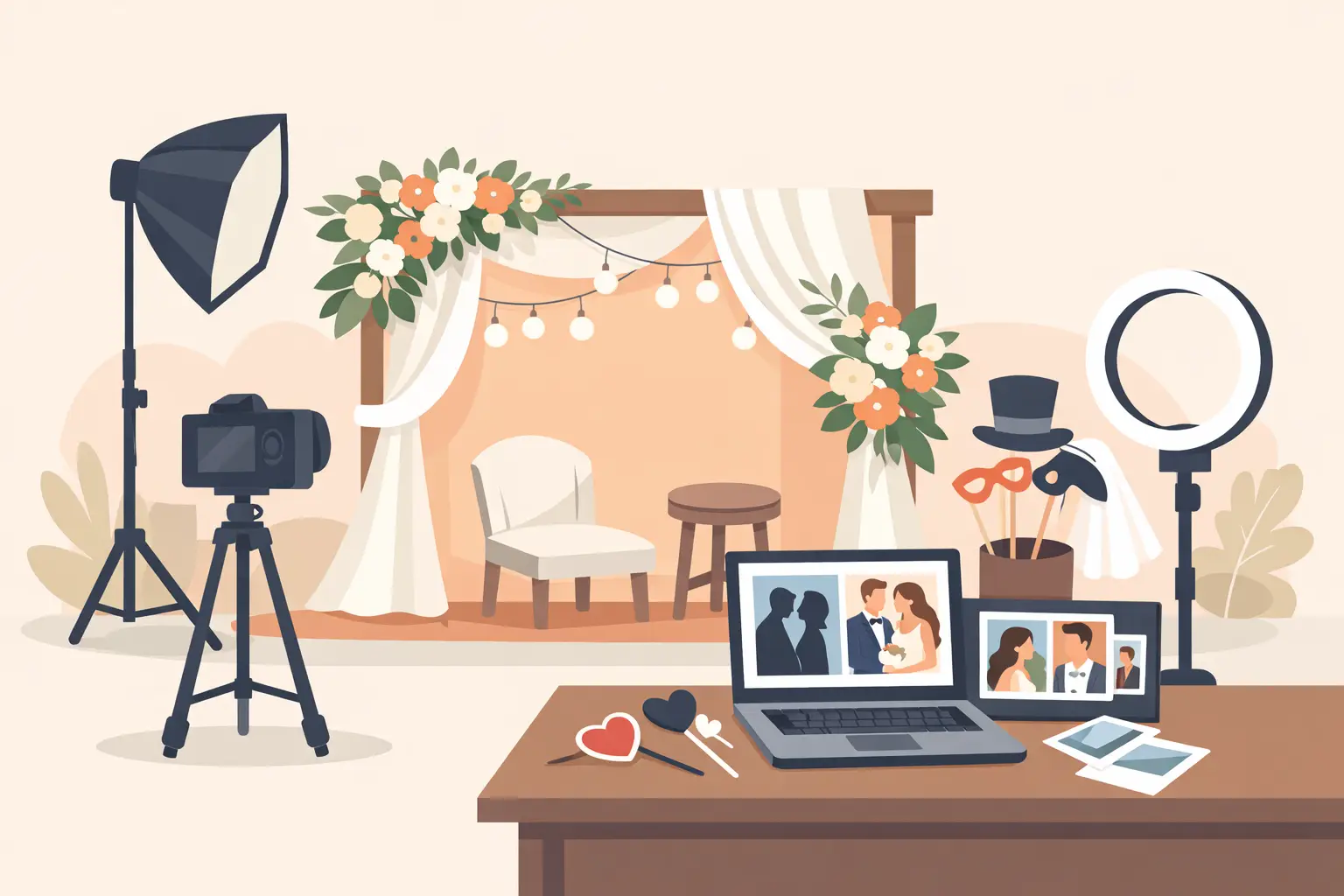
If you want a more interactive moment, create a small photo corner with flattering light, a simple backdrop, and a few thoughtful props. Keep props selective. Oversized novelty glasses can be fun for the right crowd, but they can also clash with a formal atmosphere. A vintage mirror, a statement chair, disposable cameras, or a backdrop that echoes your florals often creates a more timeless result.
The key trade-off is space. A styled corner invites posed photos, but it also needs room for guests to gather without disrupting dinner service or dancing. If your venue is tight, prioritize QR sharing throughout the room rather than trying to force a full booth setup into a corner.
Test the QR code before the wedding day
This is the least glamorous part of the setup, and it is the part that protects the entire experience. Print a sample at the actual size you plan to use, place it where it will sit, and scan it from a normal standing distance. Test it in low light too, especially if your reception moves from daylight into an evening celebration.
Check the upload flow on both iPhone and Android. Can a guest understand what to do without help? Does the album look welcoming when it opens? Are photos and videos easy to select from a phone?
A platform like wed.photo is designed for exactly this kind of low-friction sharing. Guests scan, upload in their browser, and return to the party. Your gallery can update live, while original-quality files stay together in one private place for you to download after the wedding.
Do not wait until the morning of to test. Venue Wi-Fi can be unpredictable, and cell service varies widely. If you know your venue has weak reception, ask the coordinator about guest Wi-Fi in advance and display the network name near the station if appropriate.
Think beyond photos
The most moving guest contributions are often short videos. A shaky clip of your first dance from your aunt’s table. A friend recording the packed dance floor. A quiet message from someone who could not stay until the end of the night.
Let guests know videos are welcome, especially if your collection tool supports them. A small line on the sign - “Photos and videos welcome” - can change what people choose to share.
You can also invite guests to record a quick message in a quieter corner of the reception. This works particularly well near a lounge area, where couples can set out a small sign asking guests to share one piece of advice, a favorite memory, or a note for the future. It is less about creating content and more about preserving voices you will want to hear again.
Keep the album private and the follow-up easy
Public hashtags can be fun, but they are not a complete archive. Some guests do not use social media, some prefer not to post publicly, and social platforms compress files. A private album gives everyone a more comfortable way to contribute while keeping your memories organized.
After the wedding, give guests a little time. Some will upload from the ride home; others will remember when they see their camera roll the next day. Send one warm, short reminder within a few days: “We are still smiling from Saturday. If you captured a favorite moment, we would love to add it to our album.”
Then let the collection do its work. Instead of chasing dozens of people across texts and apps, you can spend your newlywed days looking through the moments that made the room feel like yours.
A photo station should feel like part of the celebration
The most successful wedding photo station does not demand attention. It quietly invites it. It fits your decor, respects your guests’ time, and gives every person in the room a simple way to help tell the story of your day.
Set out the code, make the invitation clear, and trust the people who love you to capture what you cannot see. You may be surprised by how much of your wedding you get to relive.