Wedding Guest Uploads vs Disposable Cameras Compared
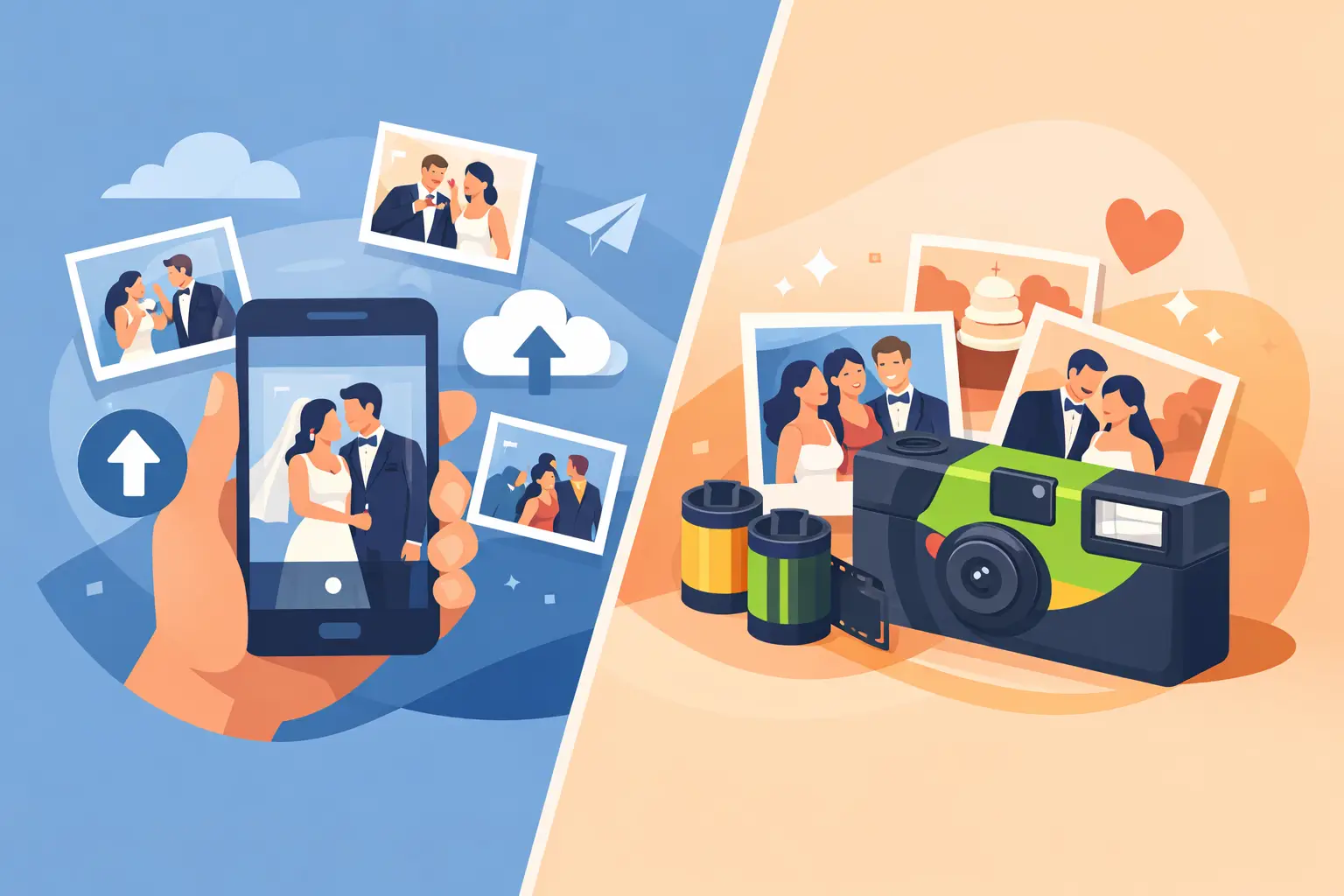
The best wedding photos are often not the ones you planned for. They are your college roommate crying during the vows, your aunt teaching your niece a dance move, and the late-night hug you never saw happen. When choosing between wedding guest uploads vs disposable cameras, the real question is not which one looks more charming on the table. It is which one helps you keep those moments without giving your guests another thing to manage.
Disposable cameras have a nostalgic place in weddings. A simple QR code can feel wonderfully modern. Both invite guests to participate, but they create very different experiences before, during, and after the celebration.
Wedding Guest Uploads vs Disposable Cameras: The Big Difference
Disposable cameras collect a limited roll of film from a small number of guests. You buy the cameras, place them around the venue, hope they are used thoughtfully, gather them at the end of the night, then wait for film to be developed and scanned.
Guest uploads use the cameras guests already have in their pockets. They scan a QR code, add photos and videos from their phone, and those memories arrive in one shared album. With a platform such as wed.photo, guests do not need an app or account, and you can see the gallery update while the celebration is still happening.
Neither option is wrong. The better choice depends on the feeling you want, your guest count, your budget, and how complete you want your final collection to be.
The Case for Disposable Cameras
There is a reason disposable cameras keep appearing on wedding inspiration boards. They look sweet on a reception table. They give guests permission to take imperfect, playful pictures. And the wait for development can make the photos feel like a small surprise after the wedding.
Film also creates a distinct visual mood. Flash-lit dance floor shots, soft grain, accidental double exposures, and slightly crooked framing can be part of the appeal. If you are hosting a small, design-forward dinner party or an intimate wedding with a strong vintage aesthetic, a few disposable cameras can become part of the decor as much as part of the photo plan.
But that charm comes with real uncertainty. A disposable camera typically offers 27 exposures. Some may be used on a purse, the ceiling, or the same group pose six times. Others may never be touched. Guests often hesitate because they know each click is finite, especially when they are unsure whether the flash is on or how close to stand.
Then there is the practical side. Cameras can disappear into handbags, get left on tables, or go home with a well-meaning guest. Developing and scanning take time, and costs add up quickly once you account for cameras, film processing, and digital scans. You may receive a handful of wonderful photos, but you may also receive very little from the moments that mattered most.
What disposable cameras do best
Disposable cameras are best treated as a creative extra, not your only guest-photo plan. They bring texture, personality, and a tactile little moment to the reception. If a few unpredictable film photos would delight you, they can be worth it.
They are less suited to couples who want broad coverage of the day, clear images, video clips, or a gallery ready to enjoy soon after the wedding.
Why Guest Uploads Capture More of the Day
Your guests already take photos. They photograph the ceremony setup before it begins, the cocktails they love, the people at their table, and the dance floor when everyone finally lets loose. The challenge is not motivating them to take pictures. It is getting those pictures out of scattered camera rolls, text threads, social posts, and AirDrop requests.
A guest-upload album makes the next step obvious. A QR code on a welcome sign, bar card, or dinner table card gives everyone one place to contribute. They can upload the photo they just took, a video from the speeches, or the candid they find the next morning while scrolling through their phone.
That ease changes the volume and range of what you receive. Instead of sharing 27 frames among an entire table, guests can add the moments they genuinely want you to have. One friend may upload five dance floor videos. Your parents' friends may add ceremony photos from their seats. A cousin may catch the quiet, in-between moment while you are waiting for your entrance.
Phone cameras also preserve images at much higher resolution than disposable cameras, especially in decent light. That matters if you want to print a guest photo later, include it in a photobook, or simply zoom in on a face without losing the memory to blur and grain.
Video is the difference many couples miss
Disposable cameras cannot record the sound of your best friend's toast, your grandparents laughing during dinner, or everyone singing along to the final song. Guest uploads can.
Those short, unpolished clips are often the memories couples replay most. They are not replacing your professional wedding film. They preserve the point of view around it: the cheers from a back table, the pre-ceremony nerves, the dance floor from inside the dance floor.
Guest Experience Matters More Than You Think
A disposable camera is familiar, but it still requires a little instruction. Guests need to find one, understand the flash, remember to return it, and accept that they cannot see the result. Some will love that. Others will take one photo and put it back.
A QR upload works because it follows behavior guests already know. They scan, select, and share. For older relatives or less tech-comfortable guests, the experience needs to stay simple: no download, no password hunt, no account creation, and no confusing feed to navigate.
The placement of your QR code matters more than elaborate instructions. Put it where guests naturally pause: at the bar, on dinner tables, near the guest book, or by the photo booth. A short line such as “Scan to share your photos and videos with us” is enough.
You can also invite uploads more than once. Mention it in a welcome sign, add it to your reception details, and ask your DJ or band for one quick reminder later in the night. The goal is not to turn guests into photographers. It is to give them an effortless place to send what they were already capturing.
Cost, Timing, and What You Receive
The cost comparison is not always as straightforward as it seems. Disposable cameras can look inexpensive per unit, but larger weddings need several to give guests a real chance to participate. Add film development and scans, and the total can climb while the number of usable images stays uncertain.
Guest-upload services are usually easier to budget for because the collection is not limited by exposures. The value is less about a single styled object on each table and more about receiving a full private archive of the people you invited.
Timing is another trade-off. Film asks you to wait, which can be lovely if you enjoy the anticipation. Digital uploads can give you a live gallery during the reception and a ready-to-download collection after the event. For couples leaving on a honeymoon or hoping to share memories with family right away, that speed feels especially good.
Privacy also deserves a place in the decision. Public social platforms make sharing easy, but they do not give you much control over where photos travel. A private guest album keeps the collection centered on your wedding, with sharing on your terms.
The Best Answer May Be Both
If you love the look and unpredictability of film, you do not have to choose one format exclusively. Use two or three disposable cameras for the dance floor or a designated “film table,” then make guest uploads your main collection method.
That approach keeps the vintage detail you love without asking a few rolls of film to document an entire wedding. You get the flash-filled surprise photos, plus the ceremony angles, videos, portraits, and spontaneous moments that would otherwise stay on guests' phones.
Think of disposable cameras as an experience for the room. Think of guest uploads as a way to wake up to the memories you did not know you were missing. The photos that matter most rarely announce themselves, so make it easy for every guest to send them home with you.