Wedding Upload Speed: What Guests Really Need
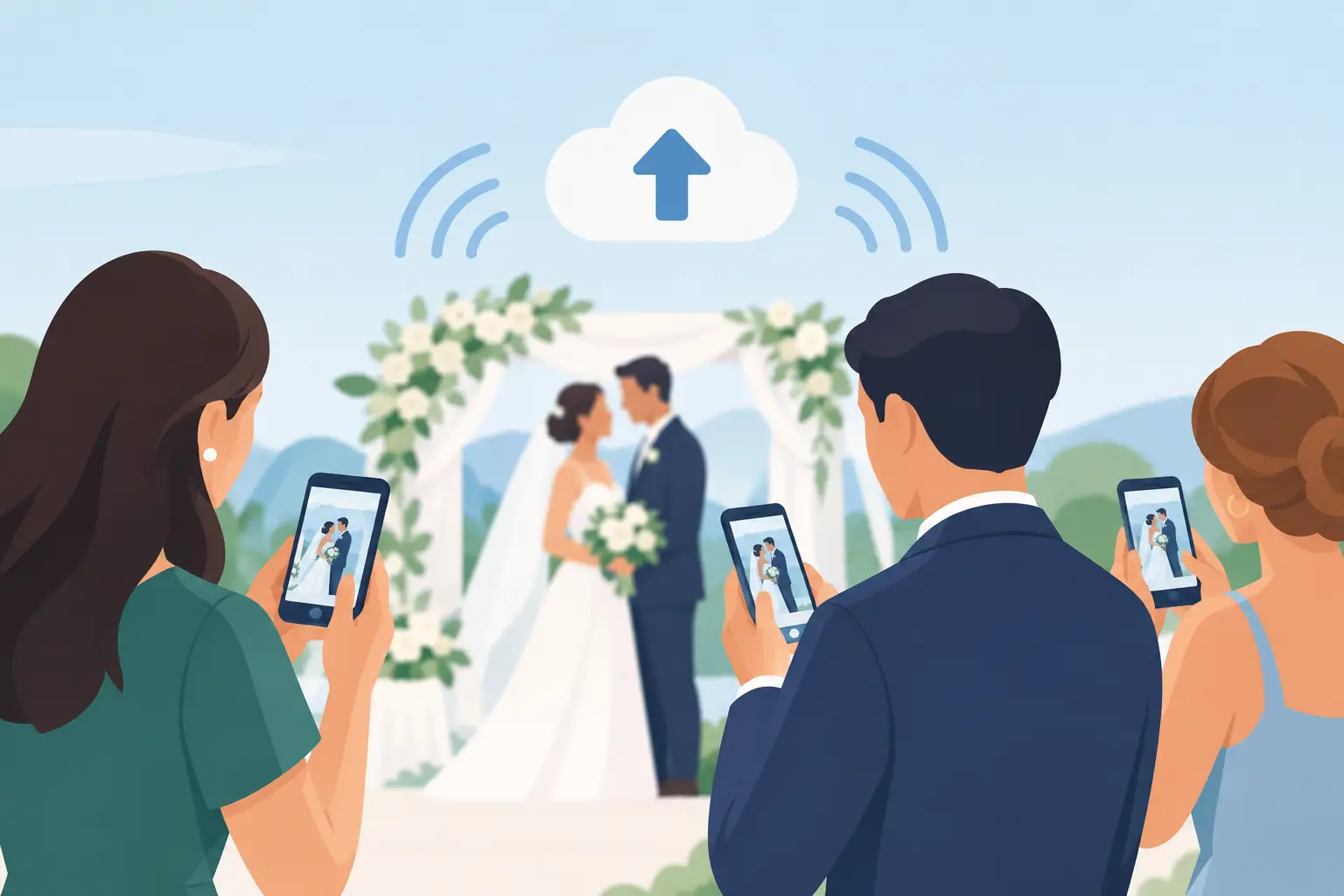
The champagne is poured, the dance floor is full, and someone captures your grandparents laughing with your college roommates. That photo is only part of the memory if it can actually make its way to you. Wedding upload speed shapes how quickly those candid moments move from guests’ phones into your shared album - and whether guests feel happy to contribute at all.
For most couples, the goal is not technical perfection. It is a photo-sharing experience that feels instant, simple, and gracious. Guests should be able to scan, choose their photos, upload, and return to the celebration without a password reset, an app download, or a long loading wheel.
Why wedding upload speed matters at the reception
A fast upload creates momentum. When guests see their photos appear in a live gallery shortly after taking them, the experience feels like part of the celebration rather than another task to finish later. It encourages more people to share the moments happening at their tables, on the dance floor, and during the quiet in-between moments your photographer may not catch.
Slow uploads do more than test patience. They change behavior. A guest who waits too long may close the browser, plan to send photos later, and forget. By the time you are home from your honeymoon, those images may be scattered across text threads, social feeds, and camera rolls that no one has revisited.
Speed also matters when you are showing guest photos during the reception. A live slideshow is at its best when it reflects the room in real time: cocktail-hour hugs, a packed dance floor, your best friend’s impromptu toast. If uploads lag, the gallery can feel disconnected from the day.
That said, fast does not have to mean cutting corners. Your wedding photos deserve to remain clear enough to print, save, and revisit years from now. The right setup balances quick browser uploads with full-resolution file preservation.
What actually affects wedding upload speed
The biggest factor is almost always the internet connection at your venue. A beautiful historic estate, beachfront ceremony, or rural barn can have limited cellular service or Wi-Fi that struggles once hundreds of guests connect at the same time. Even a venue with strong Wi-Fi may prioritize its own systems over guest traffic.
A guest’s phone connection matters, too. Some guests will be on venue Wi-Fi, some will use cellular data, and some may be uploading several large videos at once. Photos tend to move quickly. High-resolution video files take longer because there is simply more data to send.
The upload experience itself makes a difference. A browser-based upload page removes a common barrier: waiting for an app to install, creating an account, and figuring out unfamiliar settings. Fewer steps mean fewer guests abandon the process before their files begin uploading.
File handling matters behind the scenes as well. A platform can display a quick preview while preserving the original photo or video file for later download. That gives guests a responsive experience without leaving you with compressed copies that lose the details you want to keep.
Fast enough is about the moment, not a number
There is no single upload-speed number that guarantees a perfect wedding experience. A small dinner party where guests upload a few photos has very different needs than a 250-person reception with a live gallery and dozens of short videos arriving at once.
For photos, the experience should feel close to immediate under normal venue conditions. Guests should be able to select a few images and see clear progress rather than wonder whether anything happened. For videos, a visible upload status is especially helpful. People are far more patient when they know a file is moving and they can keep enjoying the party while it finishes.
The real benchmark is simple: can guests share without being pulled out of the moment? If the answer is yes, your system is doing its job.
How to set guests up for faster uploads
A little preparation goes a long way, especially at a venue where reception service is unpredictable. Start by asking your venue about Wi-Fi availability where guests will gather, not just in the getting-ready suite or event office. Ask whether the network can comfortably support a full guest count and whether there are areas with weak service.
If the Wi-Fi is reliable, display the network name and password near your QR code sign or welcome table. Keep it easy to read. Guests should not have to ask three people for a password while trying to share a photo.
If Wi-Fi is not dependable, do not panic. Many guests can use cellular data, especially for a handful of photos. In that case, encourage them to upload photos during a quieter part of the day or after the event if videos are taking longer. The collection process can remain easy even when immediate uploads are not realistic for every file.
Placement matters, too. Put QR cards where people naturally pause: on reception tables, by the guest book, near the bar, or beside a photo display. One large sign at the entrance is easy to miss once the celebration begins. Small, elegant reminders invite sharing at the exact moment guests are taking photos.
Keep the upload flow beautifully simple
The best wedding technology does not ask guests to learn technology. A guest should scan one QR code, open one private page, choose photos or videos from their phone, and upload. No app. No account. No hunting through an email invitation for a special link.
This is especially thoughtful for a mixed-age guest list. Your friends may be comfortable with every new app, while an aunt or grandparent may prefer a familiar browser experience. One clear action gives everyone the same easy way to contribute.
At wed.photo, that simple QR workflow lets guests upload from their browser while photos and videos gather in one private album. The benefit is not just speed. It is knowing that the people you love can share what they saw without turning your reception into a tech support desk.
Keep your instructions warm and brief. “Scan to share the moments we might miss” is more inviting than a paragraph of directions. Let the QR code do the work, and let the wording remind guests why their photos matter.
Photos and videos need different expectations
A wedding gallery should welcome both, but photos and videos behave differently. A photo can often be shared quickly, even on a modest connection. A high-quality video - particularly one taken in 4K - may take noticeably longer. That is normal, not a sign that something is wrong.
For a live slideshow, photos are the most reliable choice. They arrive faster, keep the display current, and capture plenty of personality. Videos are wonderful for your post-wedding album, where you can watch the full toast, the first dance from a guest’s angle, or your friends singing every word to the final song.
You can set expectations without making it feel restrictive. Invite guests to share every photo they love, and reassure them that videos may continue uploading in the background or can be added after the reception. A little clarity prevents guests from repeatedly retrying a large file and missing the next song.
A practical backup plan for difficult venues
Even excellent planning cannot create cell service in a remote location. If your venue is known for spotty coverage, build a gentler timeline around it. Let guests scan the code at the wedding, then upload when they reconnect to stronger Wi-Fi later that evening or the next day.
Make the album available long enough for that follow-up. The point is not to force every memory through before the last dance. It is to give guests one clear home for their files, so photos do not disappear into separate conversations afterward.
You can also ask a few trusted people - a sibling, wedding party member, or planner - to test the QR code and connection before guests arrive. They can confirm that the instructions are visible, the page opens properly, and the gallery is ready for its first candid.
The speed that matters after the last dance
Fast uploads help you enjoy the excitement while it is happening. But the lasting value is completeness. A good collection experience makes it more likely that you will wake up to the little moments: your flower girl making faces at dinner, your parents greeting old friends, the dance move your photographer was across the room from.
Give guests an effortless way to add their perspective. The best wedding album is not only the polished highlights. It is the joyful, imperfect, deeply personal record of everyone who was there.